
Compare colour cards in the room’s changing light
Narrow a paint shortlist by viewing the same colour cards against fixed finishes in daylight and under your usual evening lighting.
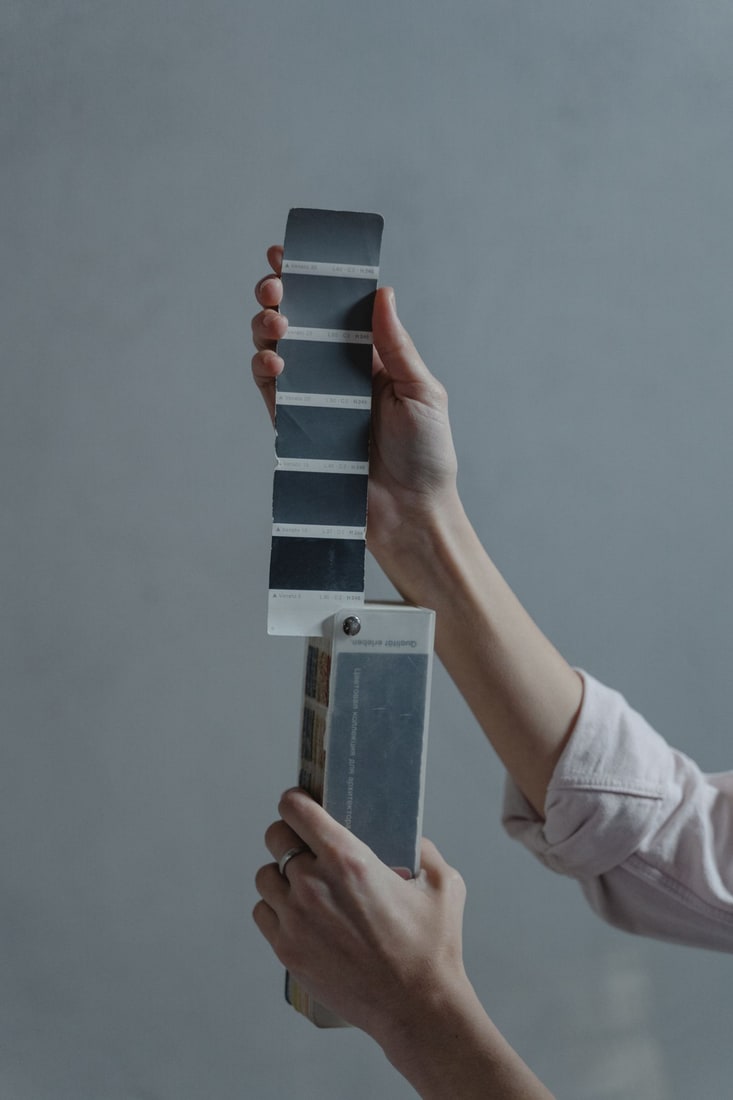
What will you learn?
Narrow a paint shortlist by viewing the same colour cards against fixed finishes in daylight and under your usual evening lighting.
Tools
- Paint colour cards or sample deck; notebook and pencilSearch Amazon South Africa ↗
Step by step
Tima Miroshnichenko · Pexels License · Resized and JPEG optimized
1. Choose a small shortlist in the actual room
Take the cards into the room rather than choosing only from a phone screen or shop display. Hold a small group near the intended wall, keeping the cards in the same light as that surface. Look at them separately as well as together because adjacent strong colours can alter your impression. Write down the exact shade names or codes so a promising choice can be identified later without relying on memory.

Photorealistic illustration · Waey
2. Compare with the finishes that will remain
Move the same shortlist near the floor, woodwork and furniture that will stay in the room. Look for how each shade relates to those fixed finishes rather than judging it in isolation. Keep the cards beside the surface without scratching or marking it. A colour that looks neutral against a white card may appear cooler or warmer near wood, so note which combinations you actually prefer in this room.

Photorealistic illustration · Waey
3. Revisit under the usual evening lights
Check the same cards again when daylight has faded and the room’s normal lamps are on. Use the lighting you actually intend to keep, because changing to an unusual bulb just for the comparison can give a misleading result. Note any shade that becomes too cool, dull or strong for your preference. Do not assume one midday view predicts every condition; the aim is a choice you accept across the room’s regular use.

Photorealistic illustration · Waey
4. Record the shortlist and plan a paint test
Record the preferred codes and the light conditions beside each observation, then fold or store the deck safely. Cards are useful for narrowing choices, but they cannot reproduce every aspect of paint finish, coverage and wall texture. Before ordering a large quantity, obtain the maker’s recommended tester or painted sample and follow its application and drying guidance. Compare that larger dry sample in the same locations and lighting before making the final decision.
Final checks
Keep the exact product, finish and shade code together. A digital photograph can help you remember the layout but should not be treated as a reliable colour match.
Sources
Photographs are credited beside each image. Generated photorealistic illustrations by Waey; linked videos remain with their creators.