
Check refrigerator temperature with an appliance thermometer
Record the temperature with a refrigerator-rated thermometer rather than treating the control dial as a temperature reading.
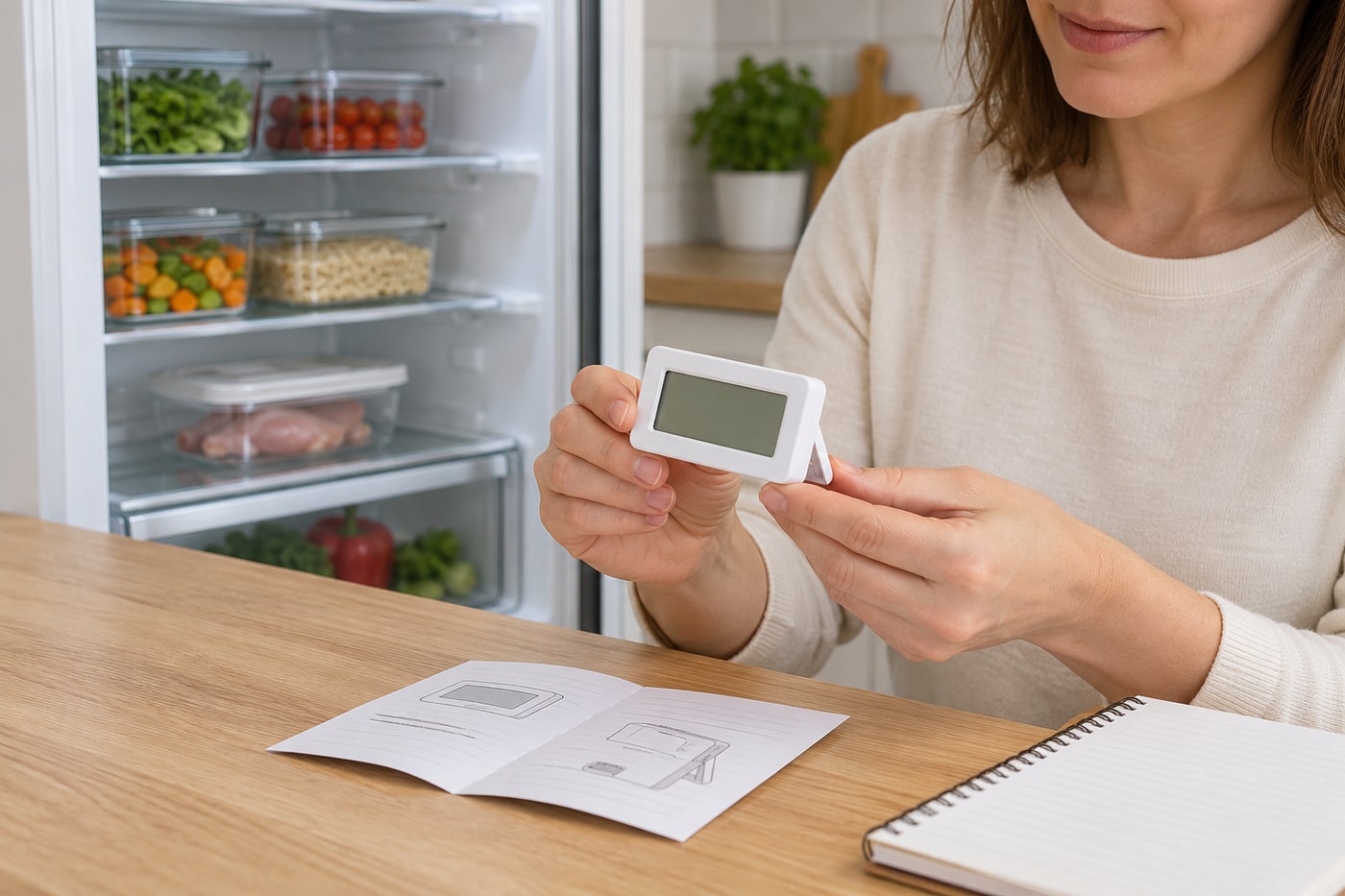
What will you learn?
Record the temperature with a refrigerator-rated thermometer rather than treating the control dial as a temperature reading.
Tools
- Refrigerator-rated appliance thermometer; notebookSearch Amazon USA ↗
Step by step
Photorealistic illustration · Waey
1. Choose a suitable instrument and read its instructions
Use an appliance thermometer designed to measure refrigerator temperatures, not a room thermometer or a cooking probe used outside its intended range. Check the units, battery requirements and recommended placement and settling time. The refrigerator’s numbered control usually describes a setting rather than a measured temperature, so copying that number into a notebook would not answer the question. Prepare a short record with the date, time and location for each actual reading.

Photorealistic illustration · Waey
2. Place it as instructed and close the door
Place the instrument in the recommended position, typically a central shelf for a freestanding model, without blocking air outlets or pressing it against the back wall. Keep food covered and the thermometer stable so it cannot fall when a container moves. Do not put an electronic model in water unless its instructions explicitly allow that method. Close the door promptly and leave the instrument to settle for its specified time.

Photorealistic illustration · Waey
3. Allow stabilisation under ordinary conditions
Keep normal door openings brief while the instrument reaches its specified settling time. Record unusual events such as a recent large food load, power interruption or prolonged open door because they help explain a reading. Do not repeatedly open the refrigerator to watch the display change. If the appliance is clearly failing to cool or food has warmed, act on food-safety advice promptly rather than waiting for this routine measurement to finish.

Photorealistic illustration · Waey
4. Record and compare with the safe temperature guidance
Read the instrument promptly and record the measured temperature and units. FDA guidance is to maintain the refrigerator at 4°C or below, or 40°F or below on a Fahrenheit display. Follow the appliance manual for any control adjustment and its recheck interval; do not dismantle cooling parts. Persistent warm readings need prompt investigation and appropriate food-safety action. Keep the thermometer for regular monitoring, remembering that one location and moment cannot describe every stored item.
Final checks
Keep records of repeated readings and any adjustment. If cooling has failed, follow authoritative food-safety advice for affected food rather than judging it by smell or taste.
Sources
Photographs are credited beside each image. Generated photorealistic illustrations by Waey; linked videos remain with their creators.