
Plan a clear walking route across a small patio
Try a furniture layout that keeps the doorway, daily walking route and occupied chairs usable before buying or moving heavy pieces.
What will you learn?
Try a furniture layout that keeps the doorway, daily walking route and occupied chairs usable before buying or moving heavy pieces.
Tools
- Tape measure; notebook and pencilSearch Amazon Mexico ↗
Materials
- Existing light patio furnitureSearch Amazon Mexico ↗
Step by step
Photorealistic illustration · Waey
1. Mark the journeys people actually make
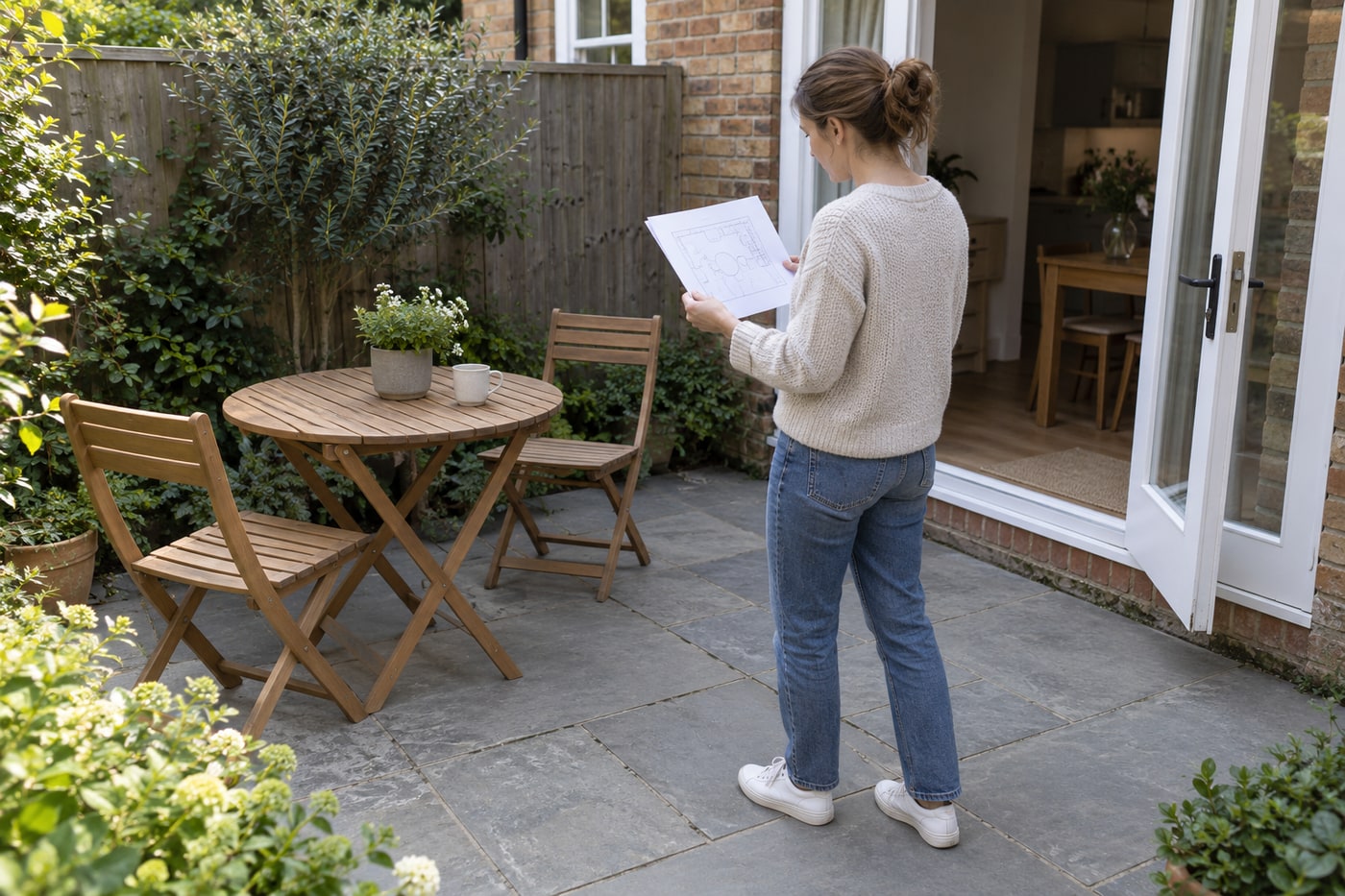
Stand at the doorway and identify the routes to seating, the garden and any other entrance. Note where the door opens and the space needed to operate it fully. Sketch the fixed features before arranging furniture, including steps, drains and pots that cannot safely move. Planning around everyday movement prevents a layout that looks spacious from one viewpoint but forces someone to squeeze past a table every time they go outside.
Photorealistic illustration · Waey
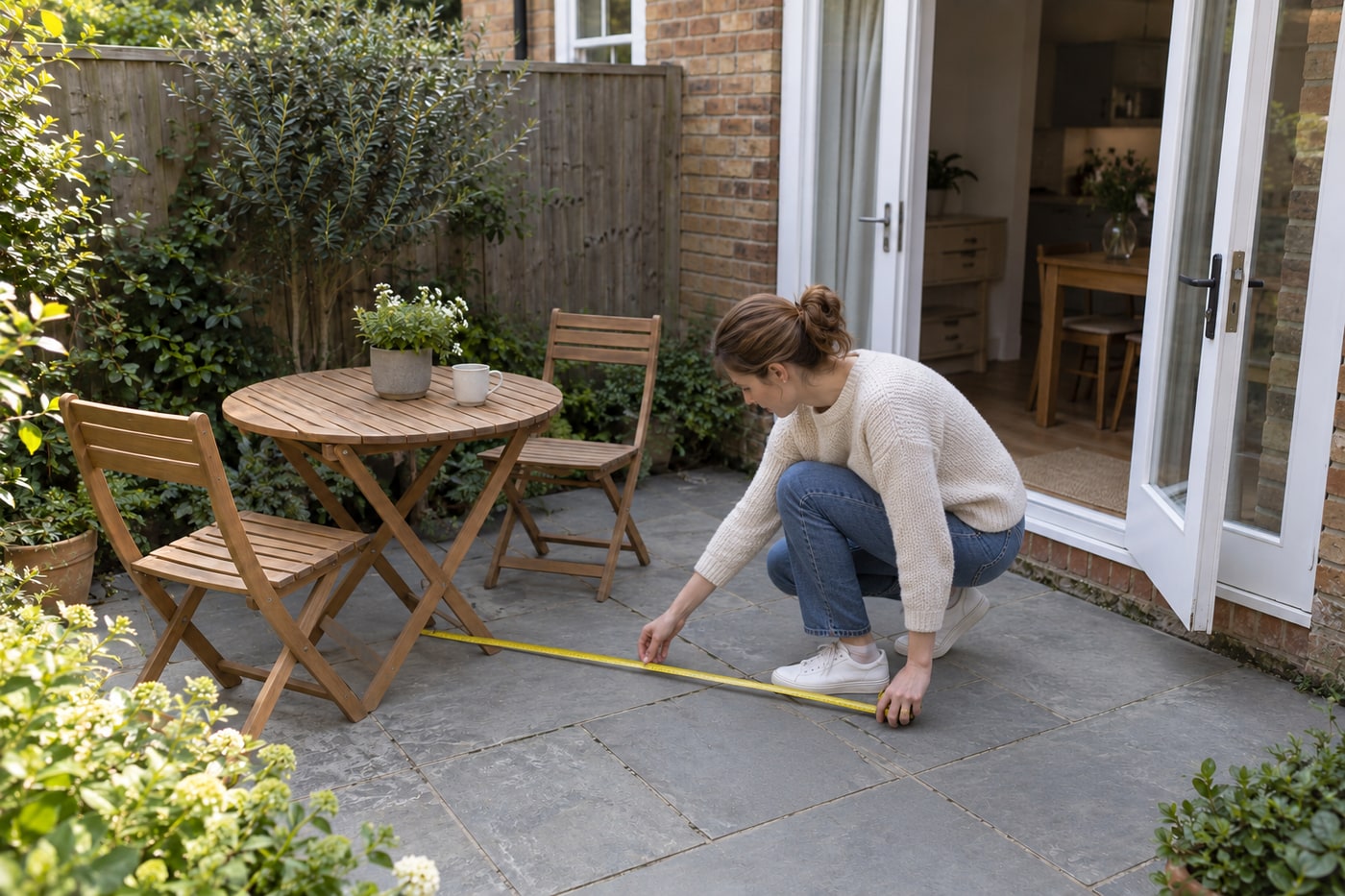
2. Measure furniture and working space
Measure the actual table and chairs instead of relying on a catalogue photograph. Include a chair pulled back for sitting down and room for someone to stand, then compare those footprints with the available paving. Keep the tape flat only while measuring and retract it immediately afterward. Treat these measurements as a practical fit check, not proof that an accessibility or building-rule requirement has been satisfied.
Photorealistic illustration · Waey
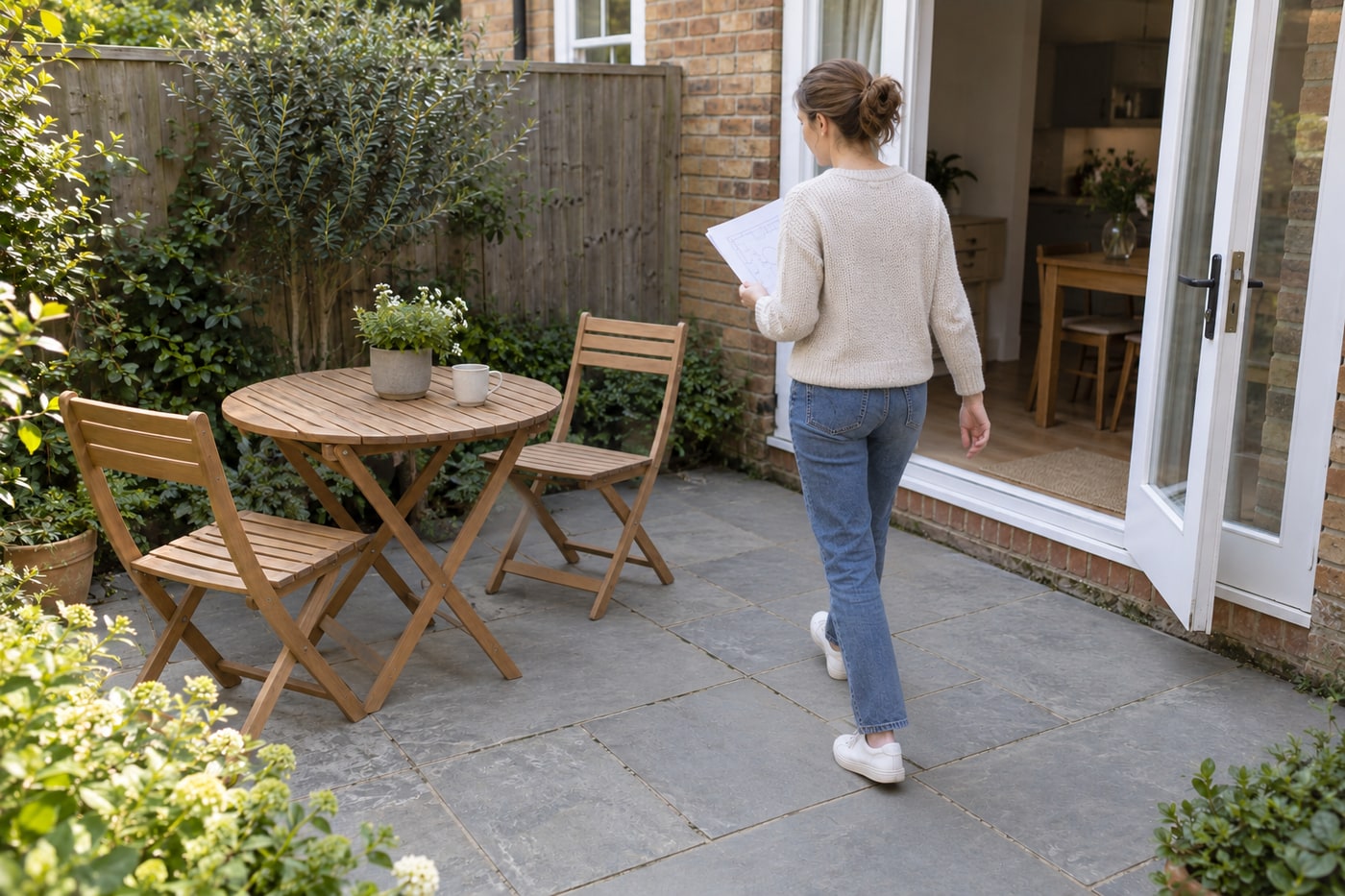
3. Test the route with chairs in use
Place light furniture in the proposed positions and pull a chair out as it would be during a meal. Walk the normal route slowly, open the door fully and check whether carrying an ordinary tray feels manageable. Do not conduct the test with hot drinks. If the route narrows or the door contacts furniture, move the layout and try again rather than accepting a permanent daily obstacle.
Photorealistic illustration · Waey
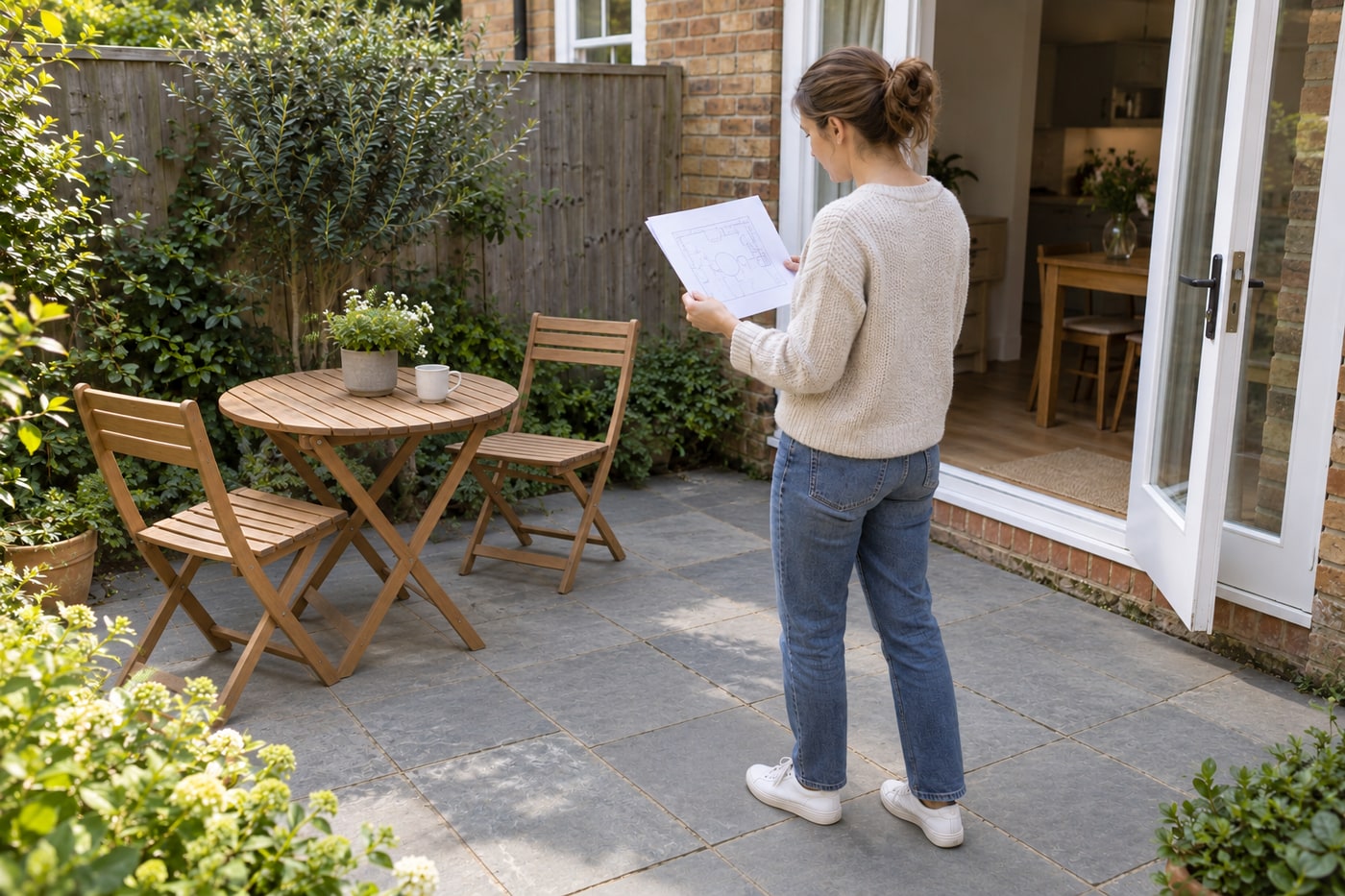
4. Record the layout and keep it clear
Write down the arrangement that works and check it from both directions, including the journey back indoors. Remove the tape and planning items, then put small pots where they cannot migrate into the route. Revisit the layout when adding furniture or hosting more people, because an extra chair changes usable space. If no comfortable route remains, reduce the furniture footprint rather than crowding the doorway or moving objects onto unstable ground.
Final checks
A successful arrangement works with chairs pulled out and the door fully open. Check any specific accessibility needs with the people who use the space.
Sources
Photographs are credited beside each image. Generated photorealistic illustrations by Waey; linked videos remain with their creators.