
Make continuous yarn from a worn cotton T-shirt
Turn a sound seamless cotton T-shirt torso into a continuous craft strip using an offset fold and advancing diagonal connections.
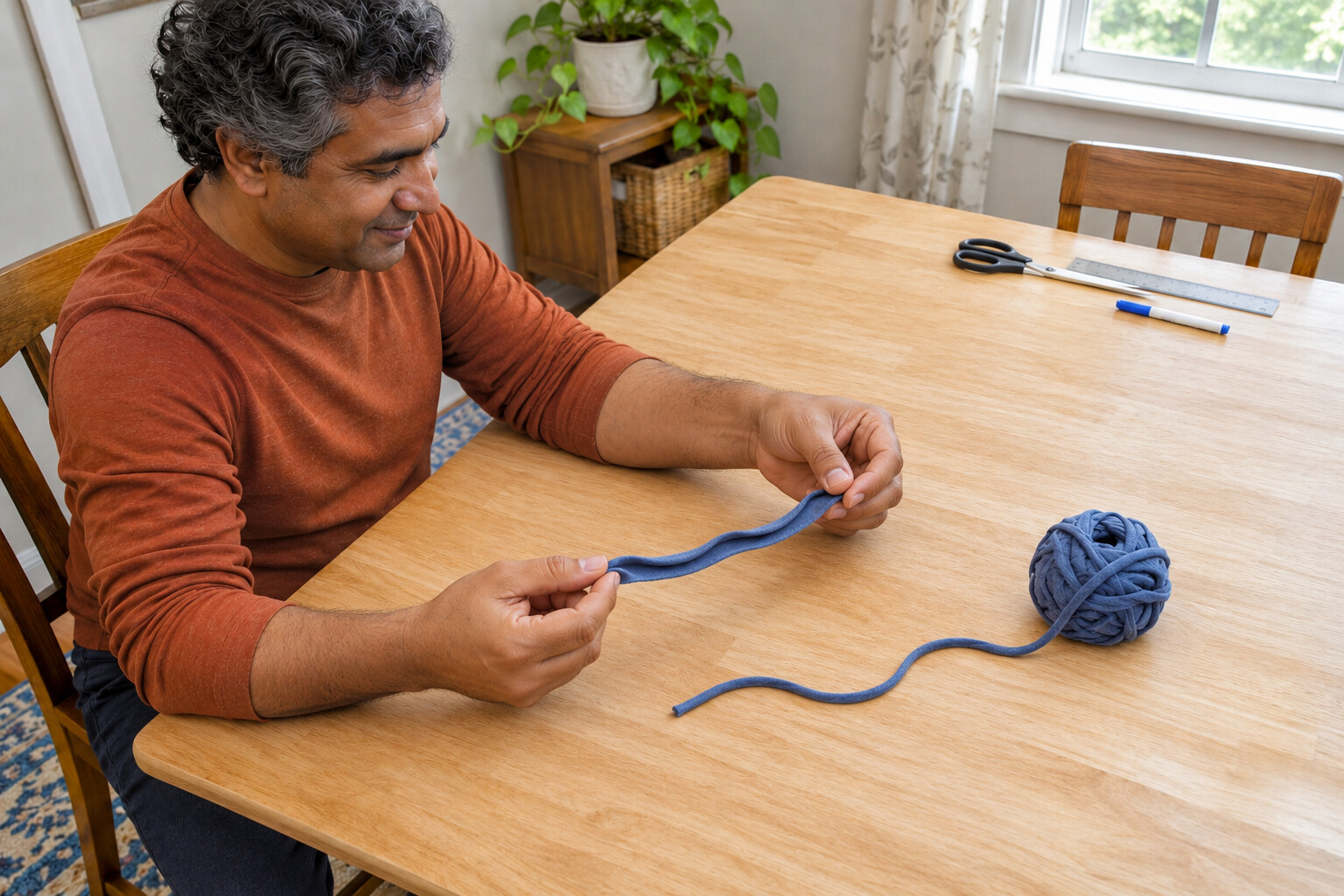
What will you learn?
Turn the sound torso of a worn-out seamless cotton jersey T-shirt into a continuous strip for craft projects. This method uses an offset fold, an uncut connecting band and diagonal joins. Check the cutting route before opening the scissors.
Tools
- Sharp fabric scissorsSearch Amazon Ireland ↗
- Ruler and washable fabric markerSearch Amazon Ireland ↗
Materials
- One clean, dry, worn-out cotton jersey T-shirt with a sound seamless torso; avoid prints, holes and side seams for this method
Step by step
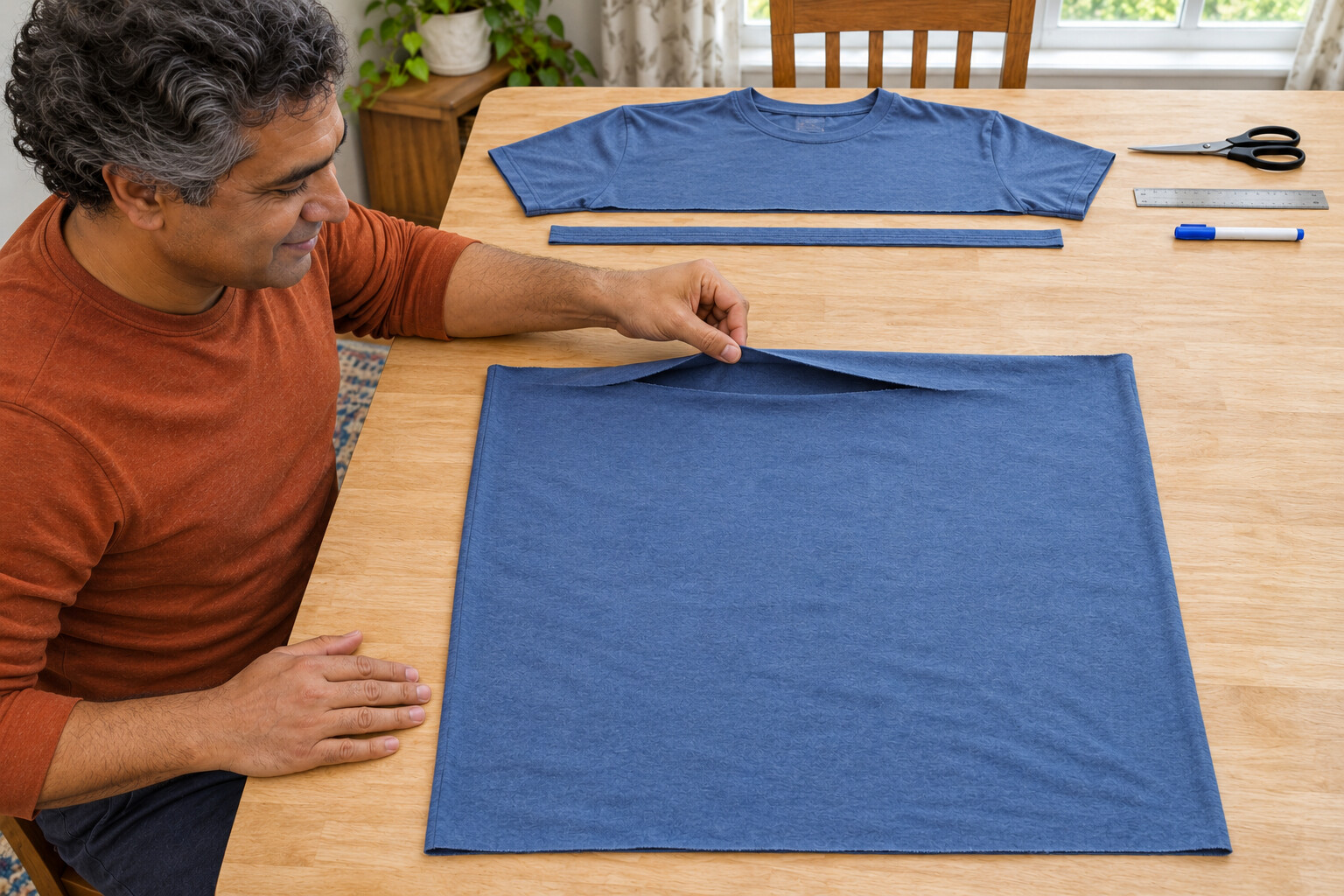
Photorealistic illustration · Waey
1. Prepare the tube
Lay the shirt flat. Cut below the armholes and remove the bottom hem, retaining the torso tube. Put the other pieces aside. Check that the remaining fabric is sound. Smooth both layers and check for side seams, holes or printed areas before cutting; this method requires a plain, sound tube.

Photorealistic illustration · Waey
2. Make the offset fold
Rotate the tube so the two raw open ends face left and right; the closed side folds are at the top and bottom. Bring the lower closed fold towards the upper one, stopping about 25 mm short. Keep the exposed upper connecting band visible and mark it as a no-cut area.
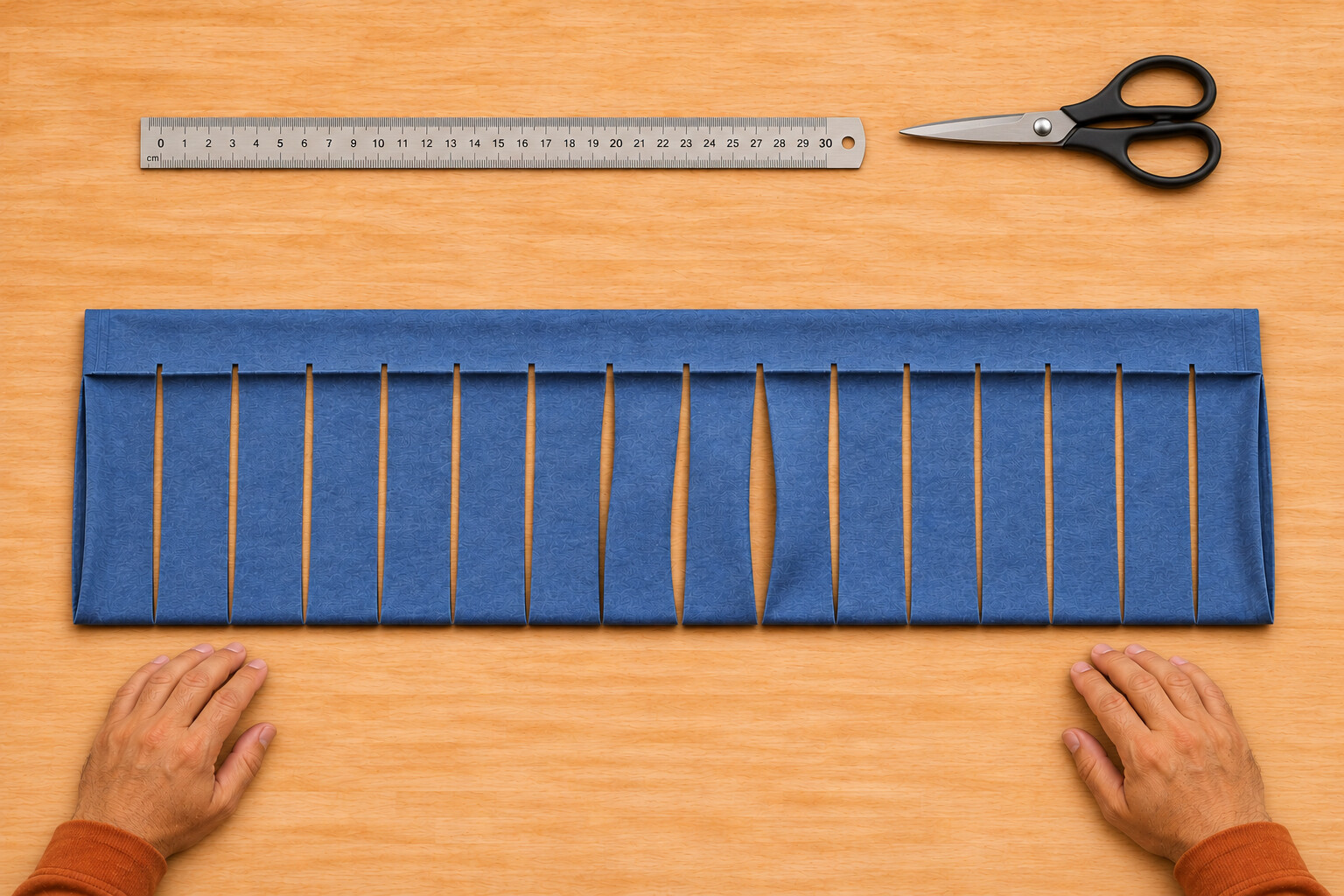
Photorealistic illustration · Waey
3. Cut the bands
Mark parallel bands about 25 mm wide. Cut up from the lower fold through all stacked layers, passing just beyond the shorter folded edge so each intended band separates. Stop before cutting across the exposed upper connecting band: it must remain intact. Check the layers before every cut.
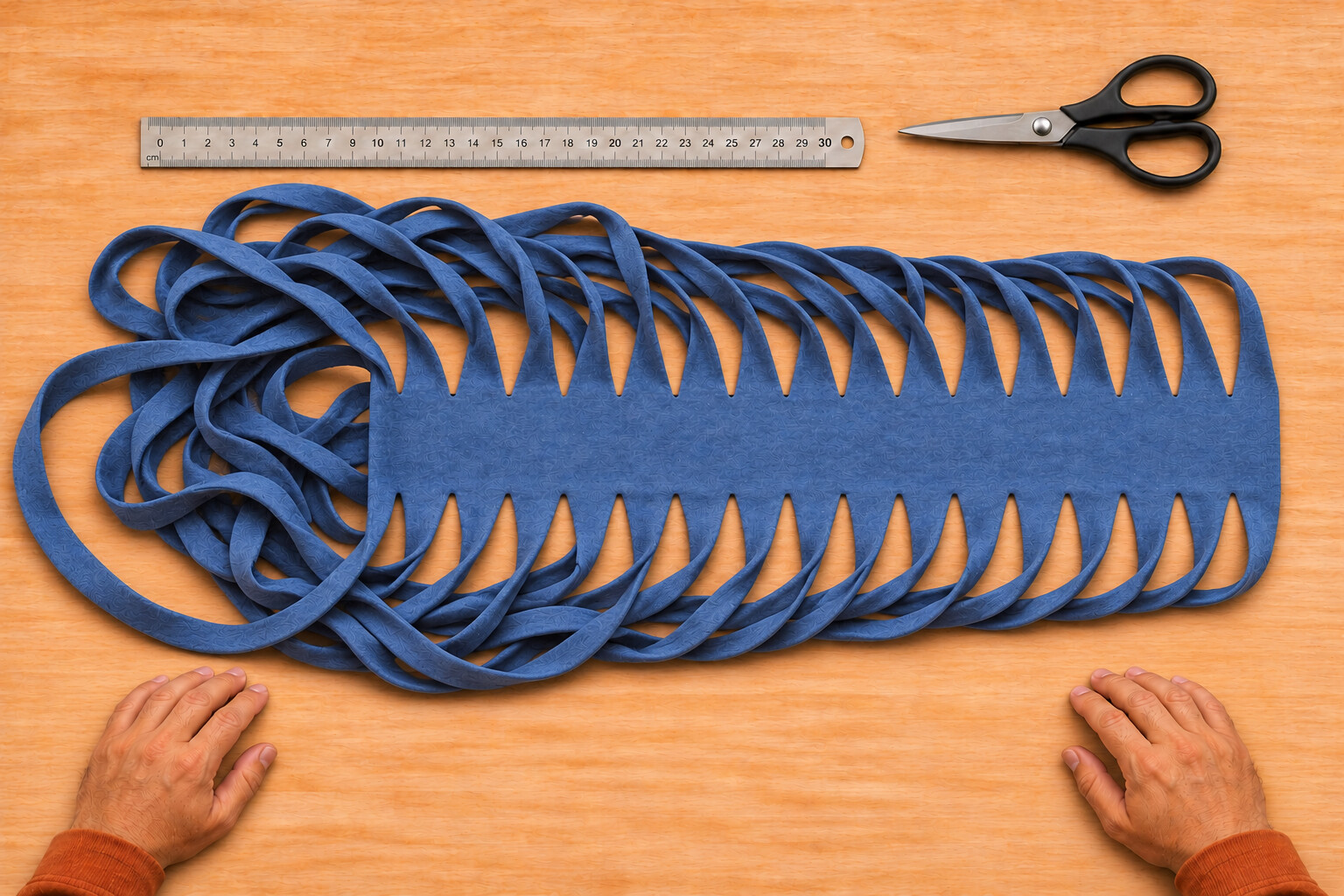
Photorealistic illustration · Waey
4. Open and trace the joins
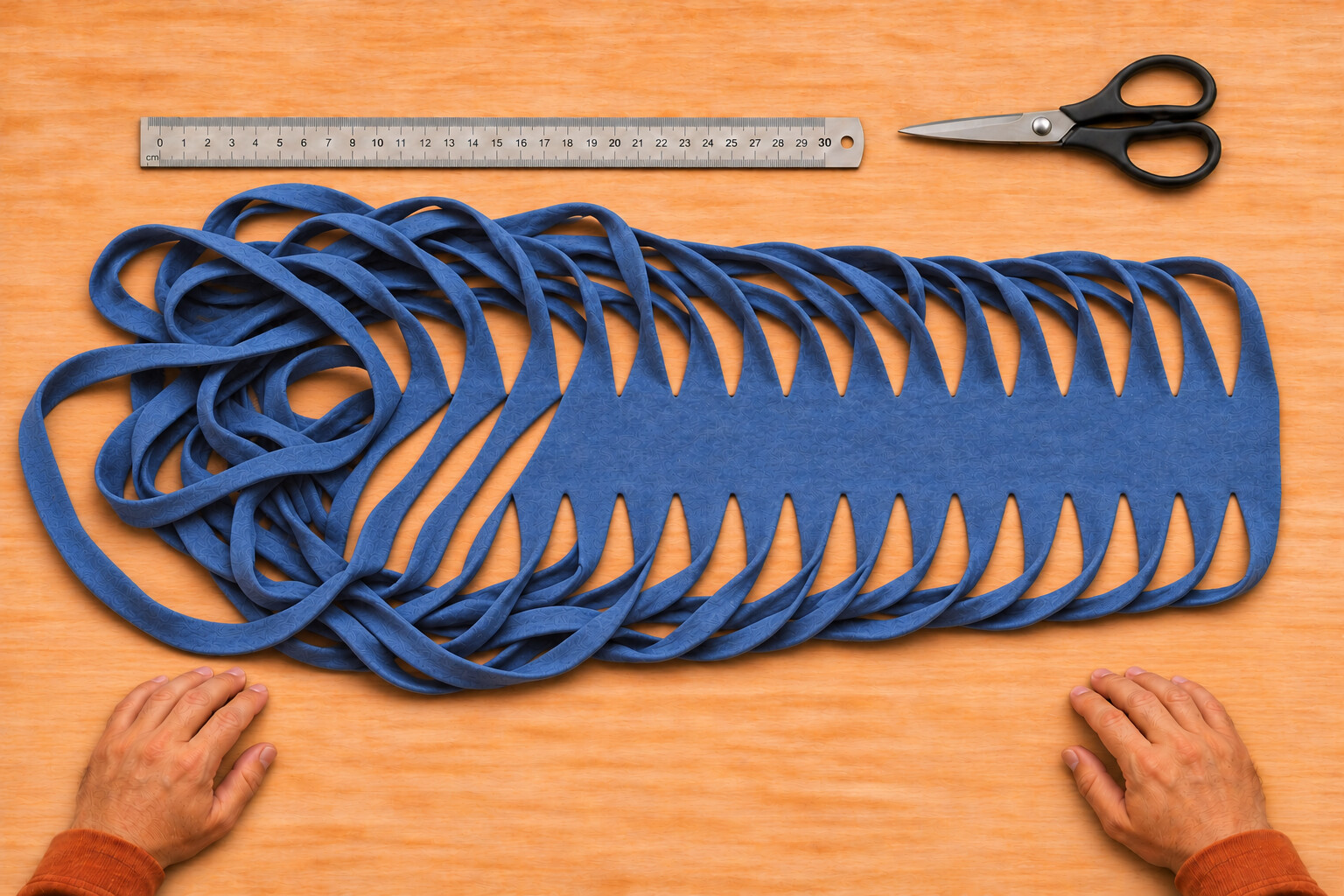
Close the scissors. Unfold the tube and lay the uncut bridge flat, with the cut ends on opposite sides. Trace a diagonal route that advances by one strip at each join. Joining directly opposite cuts would make separate loops; stop if you cannot trace one continuous route.
Photorealistic illustration · Waey
5. Complete the spiral
Spread the opened connecting band as a single layer, with all hanging loops clear underneath. Start diagonally from its outside edge to the first slit. Continue from each slit to the next offset slit on the opposite side, advancing one strip each time; the final slit exits diagonally to the outside edge. Trace the complete route first. Cut only the bridge layer, keeping hands and loose loops outside the blade path. Stop if the route or layer separation is unclear.
Photorealistic illustration · Waey
6. Curl, inspect and wind
Put the closed scissors aside. Draw short lengths gently through your hands to let the jersey edges curl. Stop on tearing or weak joins. Wind loosely without pulling tight and store the ball safely. Test a small craft sample before choosing a project.
Video demonstrations
How to make T-shirt yarn the easy way | Crochet project ideas for T-shirt yarn
Visual reference for opening and inspecting the connecting band. Use the written dimensions and trace the continuous route before cutting; keep hands clear. Only muted visual excerpts were reviewed.
Bags by Bento | Taylor · English; audio not reviewed
Watch on YouTube ↗HOW TO make continuous t-shirt yarn
Visual reference for handling curled T-shirt yarn after cutting. Work gently in short sections and stop if the fabric tears. Only muted visual excerpts were reviewed.
ReleveDesign · English; audio not reviewed
Watch on YouTube ↗Final checks
Trace one unbranched strip, inspect weak sections and wind loosely. Stop for tears or uncertain connections; test a small craft sample before use.
Sources
Original AI-generated instruction images reviewed individually and as a sequence. They show visible preparation and handling contexts, not physical conversion, fibre, strength or continuity tests. External photos and video frames were not generation inputs.